
Vimavidya
HEALTH
Health Insurance
Learn through lived experiences
Protection begins with understanding
Why health insurance matters - the wakeup call
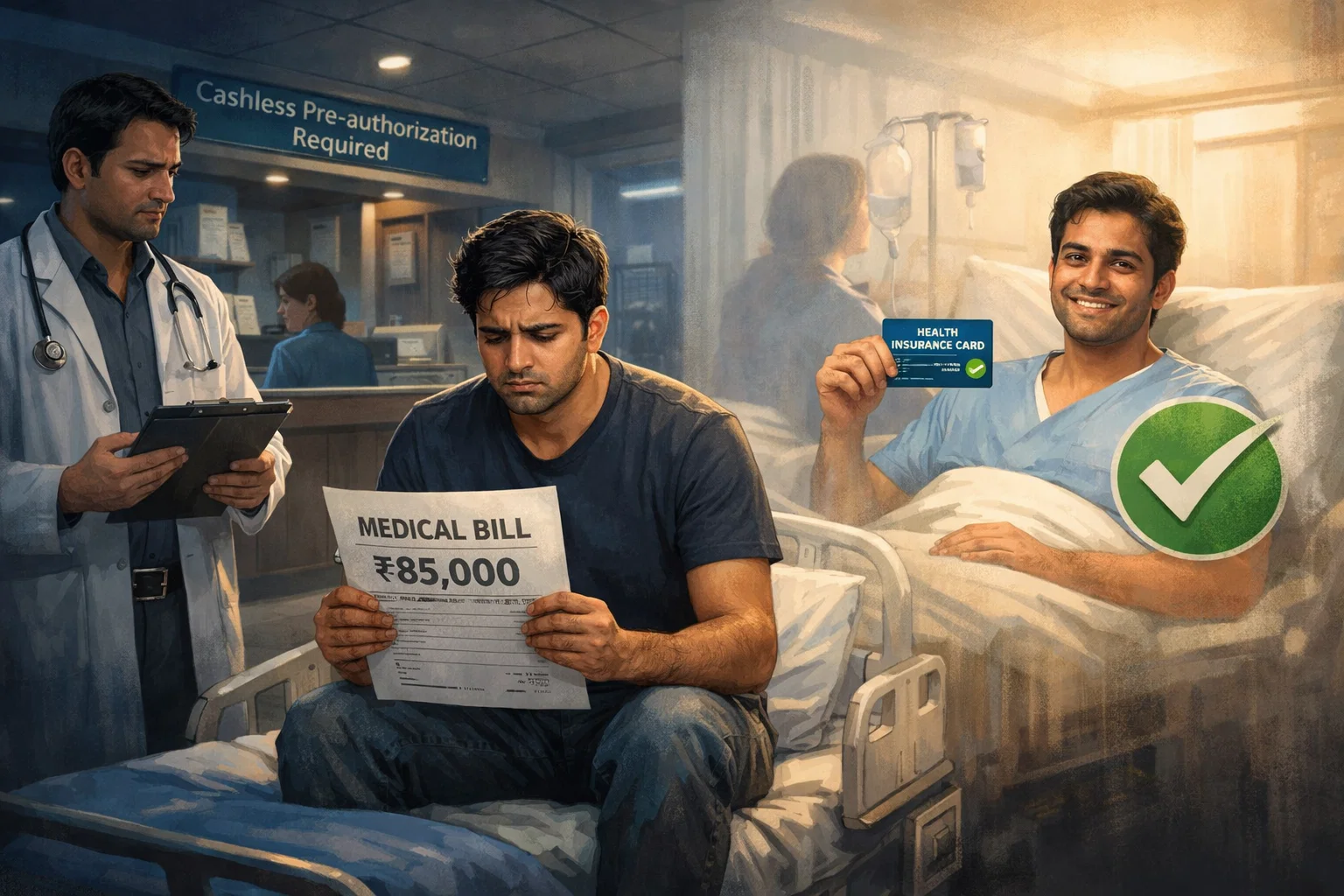
Rahul, 27, a software developer in Pune, ignored health insurance thinking he was “too young to worry.” One night, he had to be rushed to a hospital with acute appendicitis. The hospital asked for pre-authorization for cashless hospitalization, but Rahul had no policy. His ₹85,000 bill had to be paid out-of-pocket. Later, he learned that if he had chosen a plan with a ₹5 lakh sum insured, he would have access to a network hospital and could have avoided the financial stress. He also discovered that most policies have a waiting period of 30 days for non-accidental claims—so buying early is key.
Takeaway: Start early. Health insurance isn't just for emergencies- it's a financial buffer that grows stronger over time.
Choosing the right plan - the policy puzzle
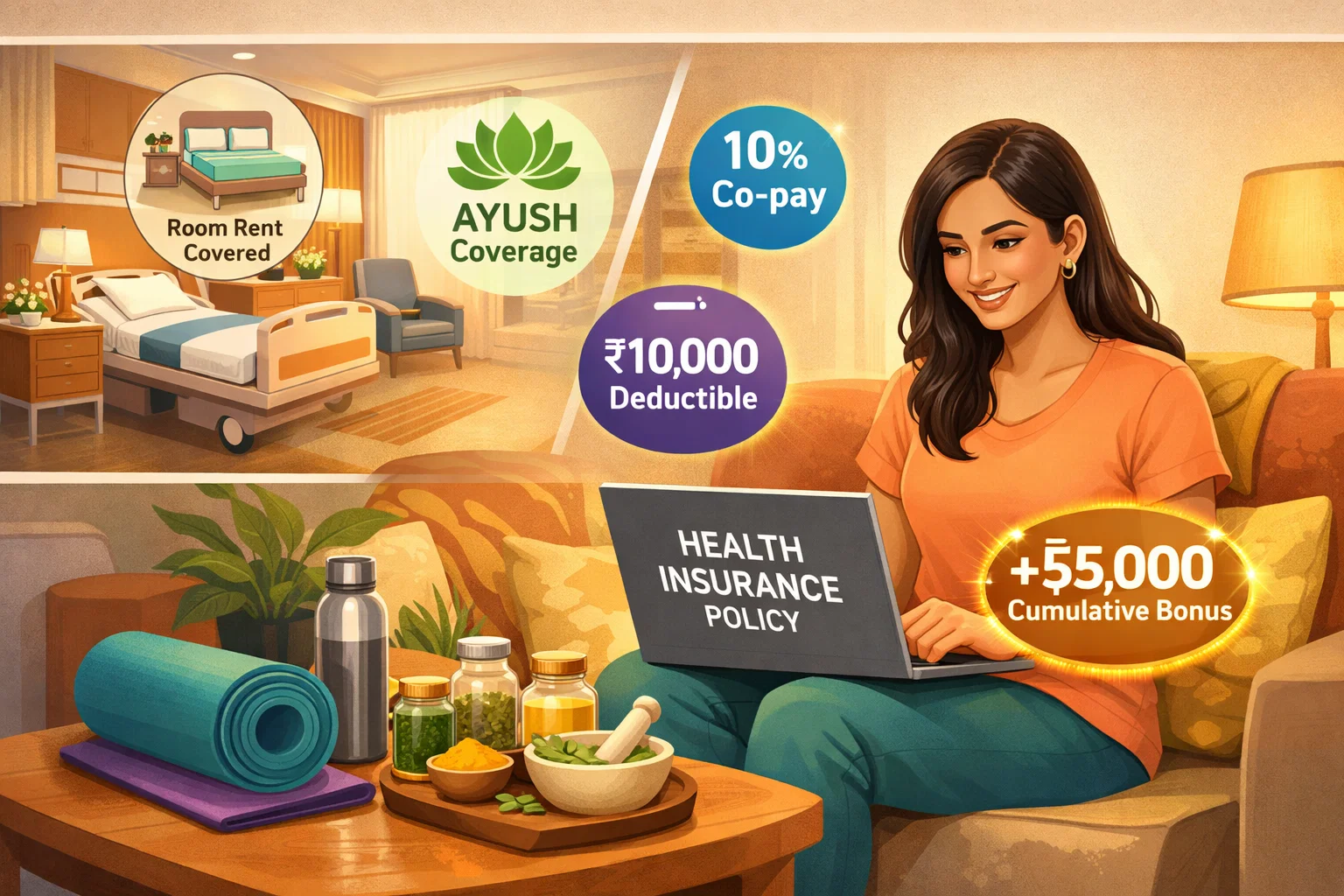
Priya, 29, a marketing executive in Mumbai, wanted a plan that covered her yoga-based recovery and occasional ayurvedic treatments. She chose a policy with AYUSH treatment coverage and a room rent limit that matched her preferred hospital from the network list.
She also opted for a deductible of ₹10,000 to lower her premium and understood the co-payment clause - she'd pay 10% of any claim. After a claim-free year, she accrued a cumulative bonus which increased her coverage by ₹50,000 at no extra cost.
Takeaway: Customize your plan. Use advantages of features like co-pay and deductible. Choose benefits that match your lifestyle.

When to buy and what to track - a smart start
Sameer, 25, just started his first job in a BPO in Bengaluru. He bought an individual health insurance policy with a ₹3 lakh cover. He knew that buying early meant fewer issues with the pre-existing diseases clause and shorter waiting periods.
Later, when his parents moved in, he upgraded to a family floater plan. He missed one renewal but used the grace period to pay and retain benefits. When his insurer raised premium, he used portability to switch to a better plan with another insurer without losing coverage history.
Takeaway: Buy early. Upgrade as life changes. Use features like portability and grace period to stay protected.
Discovering top-up health insurance a smart upgrade
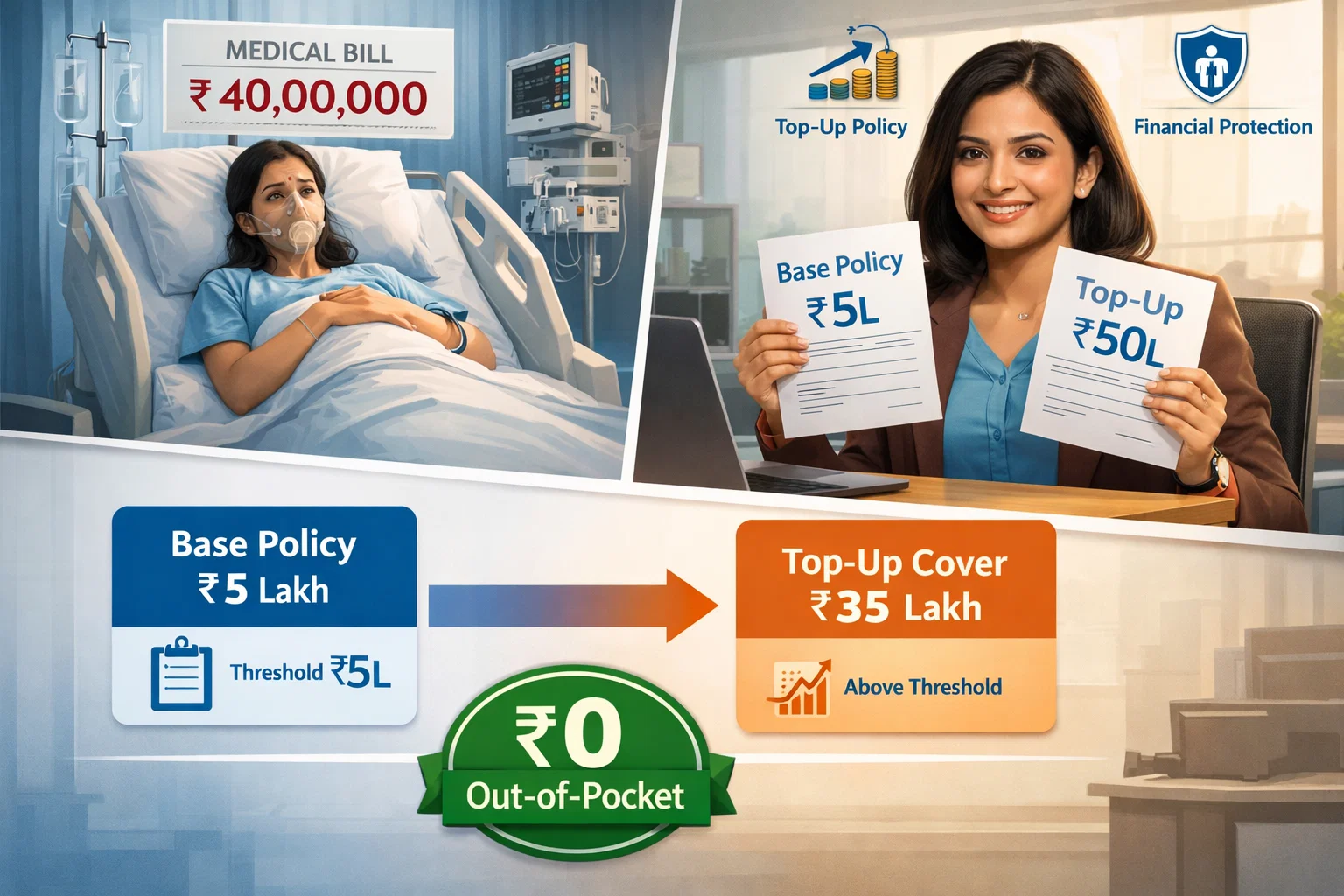
Kala, 28, a delivery manager, already has a ₹5 lakh base health insurance policy from her employer. She feels secure-until a friend's hospitalization for a major kidney surgery costs ₹40 lakh. Kala realizes her own cover may not be enough for high medical bills in cities like Mumbai.
She learns about Top-Up Policy which works like an additional policy to her base policy*. Once expenses cross a threshold limit (say ₹5 lakh), the top-up kicks in.
Kala chooses a ₹50 lakh sum insured top-up with a ₹5 lakh deductible. Now, if Kala were to face a ₹40 lakh bill:
Her base policy pays the first ₹5 lakh, The top-up covers the remaining ₹35 lakh. Her out-of-pocket cost is zero.It works with employer-provided insurance or personal policies
Takeaway: A Top-Up Policy is like a financial parachute. It saves you when medical costs soar beyond your base cover. It is the smartest way to scale protection without straining budgets.
*A top up can be purchased even if you do not have an existing policy, and you plan to use your own savings to cover medical costs.
Balancing Family Needs - The coverage choice
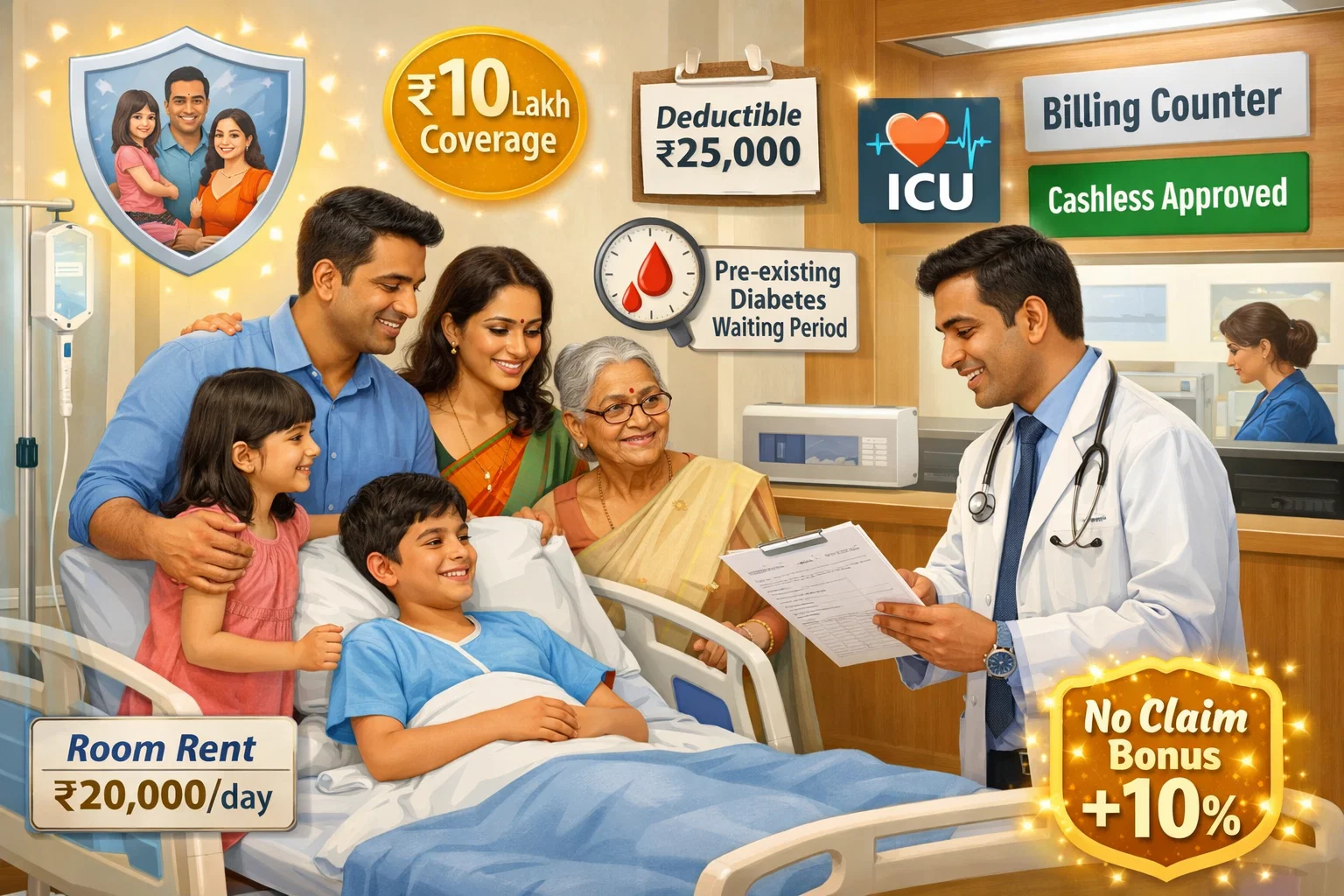
Rajesh (38) and Meera (36) from Delhi, parents of two young children, wanted protection that would safeguard the entire family. They chose a family floater plan with a sum insured of ₹10 lakhs, covering themselves, their kids, and Rajesh's mother.
To keep costs manageable, they agreed to a deductible of ₹25,000 per claim, which lowered their premium. They also understood the pre-existing disease clause since Rajesh's mother had diabetes there was a 2-year waiting period for diabetes-related claims, though new illnesses and accidents were covered immediately.
Their policy had a room rent limit of 2% of the sum insured (₹20,000/day), with full ICU coverage. When their son was hospitalized for dengue, the cashless hospitalization feature meant bills were settled directly with the network hospital. The following year was a claim-free year and they received a no claim bonus of 10%, raising their coverage to ₹11 lakhs at no extra cost.
Takeaway : Customize your plan. Use advantages of policy features to balance affordability and coverage. Choose benefits that fit your family's lifestyle, to ensure protection without straining your savings.
Managing the Unexpected- When time matters most
Arjun (41), a software professional in Pune, was diagnosed with early-stage cancer. Luckily, he and his wife Priya had a comprehensive health insurance policy with a critical illness rider. Their base policy had a sum insured of ₹15 lakhs, and the policy gave a non-indemnity benefit a ₹10 lakh lump sum payout - that could be used for treatment or for family expenses.
The regular indemnity-based cover took care of hospitalization expenses, pre-hospitalization and post-hospitalization costs, and room rent and ICU charges. Arjun filed a reimbursement claim, and after claim adjudication the funds were settled in 15 days. The restore benefit reinstated their coverage for other family members, and Arjun also used the feature of AYUSH treatment coverage to aid recovery.
Takeaway : A well-structured health insurance plan can protect your family's finances, health, and peace of mind when life takes an unexpected turn.


Planning Ahead - Welcoming a New Life
Kavita (32) and Suresh (34) from Mumbai bought health insurance specifically for maternity coverage. Their policy had a 3-year waiting period and a ₹75,000 maternity benefit limit.
When Kavita became pregnant after 3.5 years, the plan covered pre-natal check-ups, delivery expenses, and post-natal care. Their newborn was automatically included under the family floater plan, with coverage for jaundice treatment and vaccinations. Later, they also benefited from day care treatment coverage when their older child needed a dental procedure.
Through these experiences, they realized the importance of understanding the certificate of insurance, which clearly outlined what was covered and their remaining sum insured.
Takeaway : Plan early for family needs. Choosing maternity coverage with the right waiting period ensures peace of mind when it matters most.
Upgrading for Security - Growing with your family
Deepa (39) and Vikram (42) from Hyderabad realized their basic ₹5 lakh policy wasn't enough as healthcare costs had risen. They added a ₹15 lakhs super top-up policy (where deductible applies on cumulative bills during the policy period) with a ₹5 lakh deductible, giving them higher protection at a lower premium.
After 5 years, they used policy portability to switch insurers without losing their waiting period credits and no claim bonus. When Vikram's parents moved in, they chose a separate senior citizen policy instead of adding them to the family floater, keeping costs manageable.
They also learned the value of the grace period when they missed a renewal deadline, and opted for a co-payment of 10% which reduced premiums further. When Vikram's father was hospitalized, the combination of deductible and <co-payment worked smoothly, ensuring coverage without straining their savings.
Takeaway : Upgrade smartly. Use options like super top-up, portability, and co-pay to expand coverage, manage costs, and protect your family's health and finances.


Securing the Spouse - Coverage that outlasts a career
Vikram (55) and Sudha (52) in Chennai realized that Vikram's employer group cover would cease at retirement in three years. Sudha had no independent coverage. They chose a family floater plan with a sum insured of ₹15 lakhs, covering both of them with individual sub-limits. To manage higher premiums at their age, they chose a co-payment clause of 20%, which lowered their premium. They also understood the pre-existing disease clause - Sudha's thyroid condition had a 2-year waiting period. New illnesses and accidents were covered immediately though. They ensured a grace period of 30 days was included in the policy terms. Their policy had a room rent limit of 2% of the sum insured (₹30,000/day), with full ICU coverage. When Sudha was hospitalized for knee surgery, the cashless hospitalization feature settled bills directly with the network hospital. The following year was a claim-free year and they received a no claim bonus of 10%, raising their coverage to ₹16.5 lakhs at no additional premium.
Takeaway : Plan proactively before employer cover ends. A family floater with the right co-pay, room rent limit, and no claim bonus protects both spouses - especially the person without independent coverage.
Protecting the Retirement Corpus - When health costs threaten savings
Ramesh (57), a bank officer in Indore, was diagnosed with kidney failure requiring dialysis and a potential transplant. He and his wife Meena had a comprehensive health insurance policy with a non-indemnity critical illness rider. Their base policy had a sum insured of ₹20 lakhs, and the rider gave a ₹15 lakh lump sum payout regardless of actual medical expenses incurred, which they used for treatment, recovery, and household expenses during medical leave.
The regular indemnity-based cover paid for dialysis sessions, pre-hospitalization costs, room rent and ICU charges and post-hospitalization care. Ramesh filed a reimbursement claim, and after claim adjudication the funds were settled in 15 days. The restore benefit reinstated the ₹20 lakh coverage for independent use. Ramesh also used AYUSH treatment coverage for supportive therapy during recovery.
Takeaway : A critical illness rider, restore benefit, and reimbursement cover, together can shield your retirement savings from catastrophic medical costs at the very stage you are most vulnerable.

Planning for Long-Term Care - Bridging the post-retirement gap
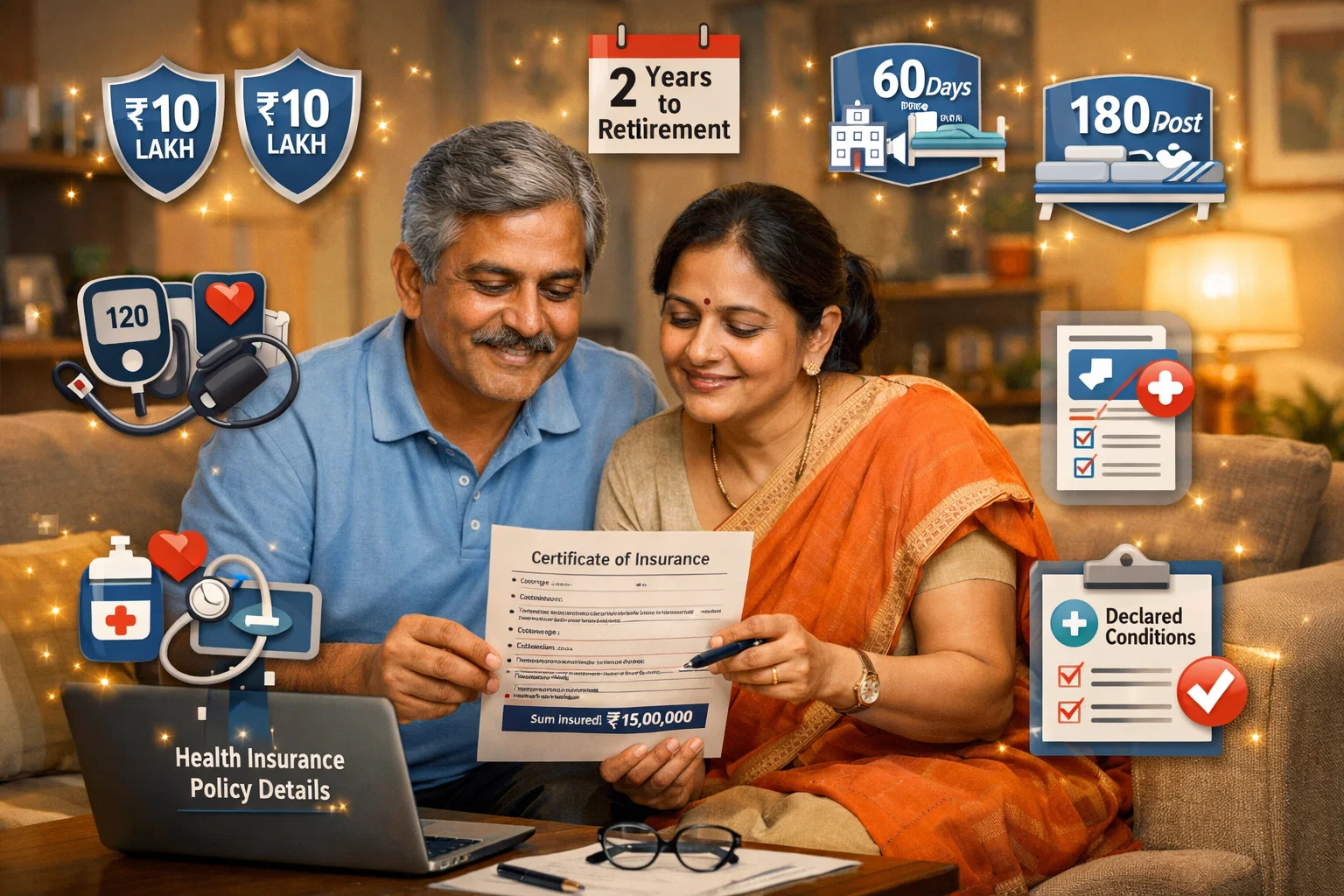
Priya (53) and Mohan (56) were IT professionals in Pune planning to retire in two years. They recognized their group cover would end. They each bought an upgraded policy for retirement protection, with a sum insured of ₹10 lakhs each, while still employed and medically insurable at better terms.
Both policies covered pre-hospitalization (60 days) and post-hospitalization (180 days). Priya declared her diabetes; Mohan declared his hypertension. After their 2-year waiting period, both conditions would be fully covered. Mohan added a day care treatment rider for procedures not requiring overnight admission. By buying before retirement and declaring all conditions upfront, they avoided claim rejections later. Their certificate of insurance gave them full clarity on sub-limits, exclusions, and their remaining sum insured.
Takeaway : Buy or upgrade individual health policies before retirement while you are still employed, healthy, and eligible for better terms. Waiting until after retirement means higher premiums, stricter criteria, and potential gaps in coverage.
Managing Critical Illness - When diagnosis changes everything
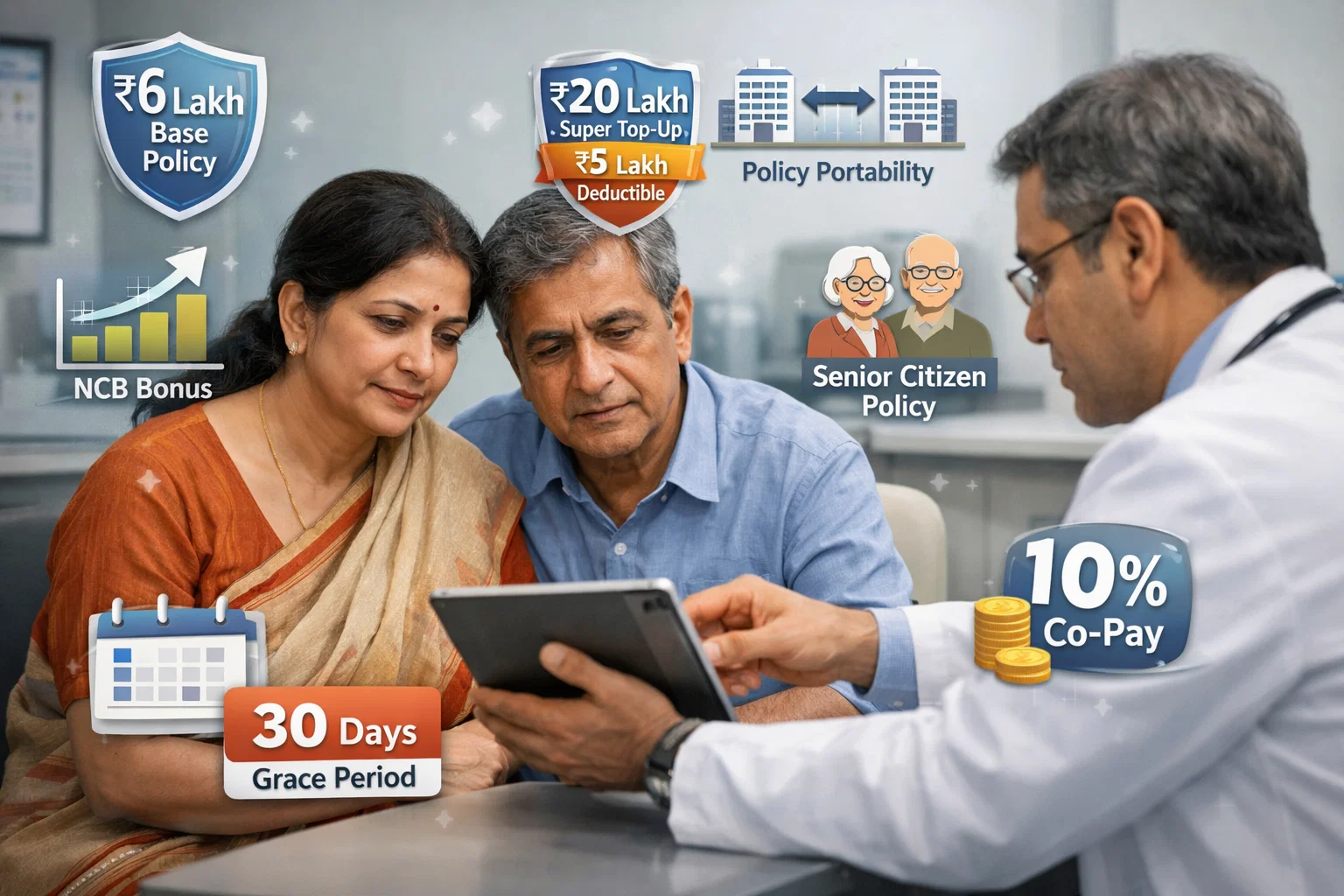
Anand (58) and Debashree (55) from Kolkata held a base sum insured of ₹5 lakhs. When Anand was diagnosed with prostate cancer, costs quickly exceeded their base cover. Their super top-up policy of ₹20lakhs with a ₹5lakh deductible stepped in, delivering higher protection at a lower premium.
Through consistent renewals, Anand had raised his base sum insured to ₹6 lakhs before diagnosis. He used policy portability to switch to an insurer with a stronger oncology network, carrying his waiting period credits forward without restart. His No Claim Bonus (NCB) had incrementally grown his effective coverage over time.
Debashree's elderly parents were on a separate senior citizen policy rather than the family floater, keeping premiums manageable. When a renewal was missed, the grace period of 30 days preserved continuity. Their co-payment clause of 10% kept premiums affordable throughout - and their savings remained untouched.
Takeaway : A super top-up, built-up no claim bonus, and policy portability together form a powerful defence against high-cost critical illness at the pre-retirement stage.